
Ready to hire great people?
![[object Object]](https://cdn.sourceflow.co.uk/1vnant3plh2jpl7t9occ9l2xyota)
Home /
Handle Insight
The people behind great events: In conversation with Oliver Merlin, CEO of Flip 180 (full interview)
Posted on 29 Sep 2026
The people behind great events: In conversation with Oliver Merlin, CEO of Flip 180
Working in events often means delivering against seemingly impossible expectations. Attendees see the finished product: a packed venue, inspiring speakers, unforgettable experiences and seamless delivery. What they don’t see are the countless decisions, challenges and hours of work that come long before the doors open.
To celebrate the people who make it all happen, I sat down with Oliver Merlin, CEO of Flip 180, to discuss what successful event planning and execution really involve. Across our conversation, we covered everything from proving demand and building a team to making difficult decisions under pressure, creating memorable experiences and knowing whether an event has truly succeeded.
Start with a reason to exist
I opened with a simple question:
"Walk me through the first 30 days of planning a large-scale event. What matters most?"
The answer came without hesitation.
Market pull. It's that simple. If your audience, clients or local market aren't already asking for the event, you're fighting an uphill battle from day one.
Instead of jumping straight into logistics or programming, the focus should be on proving there's genuine demand. Once that's in place, everything else becomes much easier.
In those first 30 days, the priorities are surprisingly clear:
- Secure one to three key commercial partners who genuinely believe in the event.
- Build local support by exploring grants, funding opportunities and public partnerships.
- Work closely with your venue to create a partnership, not just a booking. That could mean operational support, better rates or added flexibility.
"What's a behind-the-scenes decision that had a bigger impact than attendees ever realised?"
One example stood out. At a major tech conference in Amsterdam, the team made the bold decision to remove meat from the menu entirely. Most attendees barely noticed.
Behind the scenes, though, the impact was huge. The environmental benefits were significant, and the operational savings were just as impressive.
But here's the important part, it worked because it suited that audience. The same idea was tested for another major event in Berlin, and it simply didn't land.
There's no universal playbook for events and the best decisions are the ones that fit the audience in front of you, not the latest trend.
"How do you balance creativity with operational constraints like budget, venue and stakeholders?"
The answer challenged the question itself. Instead of treating budgets as something that limits creativity later, make them visible from the very beginning.
When producers, designers and activation teams understand the budget from day one, they're free to create within it. There is less compromise, fewer surprises and stronger ideas.
The best events don't start with a stage build or a marketing campaign. They start with demand, trust and a clear reason to exist. But even with those foundations in place, plans still have to survive the real world.
When plans meet the real world
"Tell me about a moment during an event launch where things nearly fell apart – what did you do?"
Oliver took me back to a launch in Turkey.
The team had passed all the staging gates and were about to launch when, at the last minute, the local government support they had relied on disappeared.
They could have pushed ahead, but without that local support, they knew they wouldn't pass the final GNG.
So they pulled the event.
It wasn't an easy decision, but they trusted the process. Sometimes, good event management is about having the confidence to stop.
"What's the most high-stakes decision you've had to make under pressure at an event?"
This time, the answer came from India.
Just before the doors were due to open, the Health & Safety officer showed Oliver three photographs of three different fire exits – all with padlocked doors.
The keys couldn't immediately be located.
With thousands of people about to enter, there was simply no way to take the risk. The opening was delayed by three hours while the team located the keys and removed the padlocks.
The feedback was terrible and they nearly had a riot on their hands.
But it was the right thing to do.
"What's a mistake you made early in your career that changed how you approach events today?"
Interestingly, Oliver's answer wasn't about event delivery. It was sales.
Early in his career, he underestimated how difficult sales could be. He was working predominantly on market-leading events, where revenue and clients came relatively easily.
As he branched out, that changed.
The lesson? Marketing and Sales need to work hand-in-hand, and there needs to be genuine respect for the work involved in winning and retaining clients and building a community.
"How do you align internal stakeholders who all have different priorities for the same event?"
When Oliver was MD of IFA Berlin, he had multiple senior stakeholders to manage, all with different agendas. It was also a joint venture with the German Consumer Electronics associations, and IFA Berlin itself was a 100-year-old German institution.
His answer was simple:
Respect.
Everyone has their own motives, agenda and idea of what success looks like.
Of course, you have your own goal – a successful event – but understanding what success means to everyone else is just as important.
"What's your approach to managing senior executives or demanding clients during an event launch?"
Communication.
More specifically, proactive communication.
Oliver sets out from Day 1 who, how and when he will communicate, both internally and externally.
Because difficult conversations don't necessarily become easier by avoiding them. If you leave the conversation to come to you, you'll already be on the back foot.
When things get difficult, the best event professionals communicate, trust the process, make the difficult decisions and, when necessary, know when to say stop.
The team and the experience
"How do you build and motivate an event team under tight timelines?"
Oliver had a pretty extreme example.
When he took on the MD role at IFA Berlin in 2023, he had just nine months to deliver the event.
He had zero people, no office and no data.
What he did have was the knowledge that he knew great people – people he could unite around a common cause.
So he made the calls and started building the team.
With a tremendous product and an immovable September deadline, they worked hard on culture and communication, met face-to-face and, importantly, paid attention to the person and not just the work.
"What's one detail that separates a good event from a memorable one?"
According to Oliver, audiences are becoming increasingly savvy and selective about which events they attend. Expectations are high.
So to be truly memorable, you need to anticipate those expectations and then deliver something unexpected.
Something the audience wasn't expecting.
Something they haven't seen before.
That thinking is built into Oliver's 14 Month Plan, a product planning methodology developed at Hyve and still used today.
One of the key pages is simply called:
"What's New?"
The ideas need to be right for the product, market and audience, but ideally, there should be something on that page that takes the audience's breath away.
"Have you ever intentionally taken a risk with the attendee experience?"
One example certainly stood out.
Oliver once took the top 40 executives from BT Customer Service to the Ministry of Sound – during the day.
The stark backdrop of an empty, industrial-style space provided the perfect environment to shine a light on the issues the organisation was facing at the time.
Different? Absolutely.
But sometimes that's exactly what makes an experience memorable.
"Beyond attendance numbers, how do you measure whether an event truly succeeded?"
Oliver's answer was refreshingly simple:
Smiles and thank yous.
Two very human measures that can easily be overlooked.
Of course, there are commercial measures too. Onsite rebooking should be in the high percentages – 70%+ – while churn is another metric organisers shouldn't ignore.
And ROI isn't always about immediate financial return.
Press mentions, increased social followers and more traffic to your website can all contribute to the bigger picture.
Because ultimately, the best events aren't just the ones that look good on paper.
They're the ones people remember, talk about, come back to – and say thank you for.
Strategy, timing and knowing your market
Great events need more than a good idea. They need a clear reason to exist, the right market behind them and a strategy that can evolve as the event grows.
“When you launched your most successful event, what was the original goal – and did it change along the way?”
Interestingly, the original goal was fairly unambitious: market penetration.
But over time, that evolved into something much bigger – a significant cultural and societal event.
It’s a good reminder that even the strongest event strategies can evolve once an idea meets its market.
So how do you know whether an event is worth launching in the first place?
Oliver has developed a tried and tested launch methodology, originally established at i2i Events back in 2013.
The approach uses a series of stage-gates – essentially mini Go/No-Go decision points – followed by a final decision before committing to the launch.
It’s a data-driven process designed to test whether an idea has a genuine market behind it.
But even the best methodology can't predict everything.
“You can never really predict the rate of scale and the level to which an event will catch fire… or not.”
And perhaps that’s part of what makes launching events so exciting. You can do the research, follow the data and make informed decisions – but ultimately, you never know exactly how a market will respond.
Looking beyond the industry
One of the things that stood out throughout our conversation was just how much goes into creating a successful event.
And according to Oliver, people outside the industry consistently underestimate one thing:
Time.
There’s a perception that a good event can be delivered in three or four months.
The reality?
A top-class event operates on a rolling 14-month cycle.
That long-term thinking also applies to some of the trends currently shaping the industry.
One that Oliver believes is particularly overhyped is festivalisation.
There’s nothing inherently wrong with the concept. The desire to create events that entertain as well as provide a trading environment comes from a genuine need to keep audiences engaged.
But turning every trade show into a “festival” isn't necessarily the answer.
As Oliver puts it, there are also many different interpretations of what a festival actually means.
The lesson?
Trends can be useful, but they aren't a substitute for understanding your product, your audience and what they actually need.
Knowing when to change direction
Oliver’s own approach to launching events has also evolved.
Earlier in his career, his focus was largely on geo-cloning or geo-adapting successful events.
Today, he’s more open to greenfield launches – creating something entirely new, both for his own business and for clients.
That openness to change seems to run through much of Oliver’s approach.
When I asked:
“If you could relaunch one event you’ve done, what would you do differently?”
His answer was simple: Blend.
The event had been launched on behalf of FIRA in Barcelona, with the aim of getting it up and running quickly.
The mistake, Oliver felt, was treating it as a regular commercial event.
In reality, it needed to be treated as a community event – something that would require time and patience to nurture over several years.
And that brings us back to one of the biggest themes running through our conversation: know your market.
The advice
So, what would Oliver tell someone leading their first major event launch?
First, make sure there is a genuine community or market behind the idea.
Just because you think an event is a good idea doesn't mean the market will agree.
You need the backing of a strong community that you are well embedded in.
And then?
Capture the zeitgeist.
Every event has its moment. The right time, the right market and the right conditions can make all the difference.
Get those things right, and you're in with a shout.
Finally, I asked Oliver about the one principle he would never compromise on.
The answer was immediate:
Quality content.
Even the most commercial exhibition needs great content.
People are natural learners. They want to hear from experts in their field, so make sure those experts are in the room.
It sounds simple, but perhaps that's the point.
Across our conversation about launching, delivering, adapting and evolving events, some clear themes kept coming back: understand your market, build the right community, don't be afraid to challenge the expected and, above all, create something that genuinely gives people a reason to be there.
Because great events aren't just about what happens when the doors open.
They're about having the right idea, at the right time, for the right audience – and having the people, strategy and vision to bring it to life.
A huge thank you to Oliver for such an open and insightful conversation, and for sharing the thinking behind the events we often only see once everything is ready.
Whether you’re an events professional exploring your next opportunity or a hiring manager looking for exceptional talent, I’d love to connect. Get in touch to discuss your goals or the latest trends shaping events recruitment.
About Natasha
With over two decades of hands-on experience in the events industry and specialist recruitment, I work closely with event businesses and professionals to connect exceptional talent with the right opportunities. From specialised brand activations to B2B exhibitions, and beyond, I focus on placing senior event professionals into roles where they can truly make an impact.
About Flip 180
Our company was born based on our expertise and ferocious drive to provide a first-class solution to companies large and small to help them flip their brands, launch new products and grow their revenues.
For years, we have been working on events organisers around the world, taking them from their stagnant state and transforming them into market leaders. From product development, global strategies to granular details of the execution, we have changed the game for many well-known exhibitions, tradeshows and conferences.
The magic isn’t just in the work we do, it is also in what we believe, how we behave, how we lead, educate and evolve your teams. We work rapidly and efficiently with the best of the best.
Post author
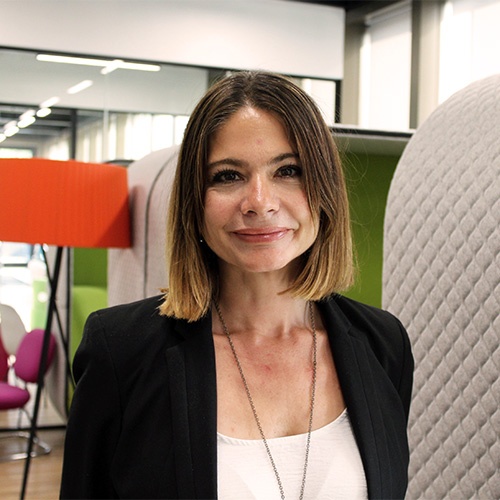
Senior Consultant - Sales | B2B Marketing | Event Operations
for employers
Ready to hire great people?
We provide leading entertainment companies, social networks, global media brands, sports bodies, retailers, and tech platforms with talent solutions that make a difference.
for jobseekers
Search for your next role
We do things a little differently, a little better, because finding opportunities at great brands should be enjoyable.